August 25, 2013
Last spring a farmer in Oregon sprayed his field with Roundup, a glyphosate weedkiller. The weeds died but tufts of wheat in the field did not. After getting in with a weed scientist from Oregon State University all hell broke loose. In the beginning, no one really thought this wheat could be genetically modified, but they also knew a few years ago Monsanto had been carrying out field trials in the area.
Well, sure enough, it turned out the wheat was genetically modified (GMO). This didn’t make a whole lot of folk happy. The USDA launched an investigation. Monsanto launched their own investigation—their representative speculated anti-biotech activists may have stolen Monsanto GMO wheat and purposely planted it in the farmer’s field (few folk gave that argument much credibility). The USDA contact all the seed suppliers the farmer bought seed from. Two heavy weight rice buyers, Japan and South Korea, shut down all their purchases of U.S. wheat. And of course, due to no fault of his or her own, the farmer was right smack in the middle of it all.
No one ever figured out how the wheat got into the farmers field. Since no other GMO wheat was found in Oregon, South Korea started buying U.S. western white and soft white wheat again in early July. Japan followed suit a few weeks ago. What seems apparent, and I think surprises few farmers, is if a plant out of doors it just might figure out a way to reproduce itself—whether humans like it or not. What is also apparent, biotech companies like Monsanto are not going to let a little hiccup stop their work of genetically modifying the food we eat.
I’ve never been a proponent of GMO food. There are quite a few other folk who also don’t idea of marrying a salmon gene to say a corn gene to get something better. Seems to me, corn is pretty good as corn and salmon are just fine as they are. Yet I also realize I have had trouble with a number of the ways science has come up with to reproduce people. I kind of like the idea of reproduction through sexual intercourse—seems enjoyable for most of the worlds animals and it works for the most part. However, today I have a lot of non-intercourse produced brothers and sisters and I think I am better off with their smiles, humor, and insights.
I read Gene Logsdon’s essay Organic GMOs? the other day and it got me to wondering if it is possible folk will accept GMO food one day because their benefits seem to outweigh their detriments. Logsdon talks about the “greening disease” that infects orange trees and can eventually kill them. There is no cure for the disease and there are no trees in the world that have natural immunity. The disease could be the end to oranges and orange juice. This has led genetic scientist to wonder if a spinach gene spliced to that of an orange could result in immunity. Can it be that a GMO spinach-orange tree is better than a world without oranges? Or better than the continual aerial bombardment of toxic chemicals throughout the orange tree landscape?
Then there is the Creation question. What if the created being of some folk is that of a chemist or biologist? If the mystery of life has allowed humans to be gifted with skills to wonder and imagine a spinach-orange tree that would save oranges and eliminate tons of toxic chemicals being sprayed, should that be given some thought? A problem with GMO work is that most if not all of it is profit driven. My guess is the CEO and Board of Monsanto are more concerned with return-on-investment and their stockholders, than the wellbeing of the creative earth. However, what if the beginning point of GMO chemist and biologist work began with the question of how they might enhance the wellbeing of creation or restore wellbeing in those areas that have become problematic due to past human intervention?
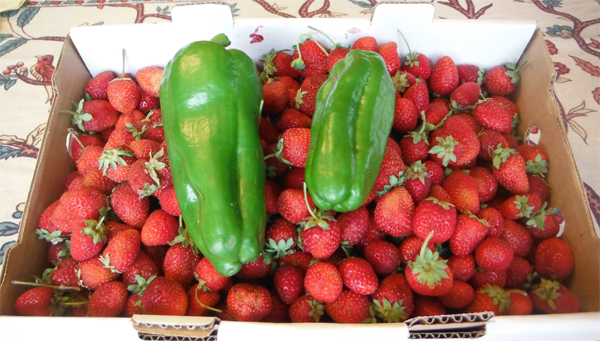
Then again there is the Pluot, hybrid of a plum and an apricot. Few folk have a problem with hybrids and they taste pretty good. Yet, I remain a bit conservative on this one. I like plums, I like apricots, and I like them as they are. What is right? What is wrong? I’m not so sure, but maybe I’ll get a bit of apricot jam on a slice of non-GMO, bread grab a cup of fair coffee, and wonder what life might be like replacing a glass of orange juice with a blend of strawberries and peppers.
© David B. Bell 2013


 Chewing the Cud
Leave a reply to Dave Cancel reply