July 2, 2011
In a few week the Disciples General Assembly begins. On Wednesday July 13 at 4pm David Bell is offering a workshop on how the Doctrine of Discovery influenced the theology and structure of Disciples of Christ (DOC)and how that theology led to the development of the Yakama Christian Mission.
During the weeks ahead, a conversation at http://ridgevalleyreflections.wordpress.com/, the Mission’s Journal/Blog site, will occur on the Doctrine of Discovery. If you have never heard of the Doctrine of Discovery (Doctrine), you’re not alone. Folks in the United States don’t teach about the Doctrine in either the public school system nor in the Christian Church, even though both have been deeply influenced by it—and though these institutions so we have been influenced. Therefore, the Doctrine is a silent part of all of our U.S. lives, but known more about on reservations than off reservations.
To begin this conversation it is good to say the Doctrine of Discovery is not a document, but rather a series of papal bulls, edicts, Supreme Court decisions, newspaper articles, International government policies, U.S. government policy-legislation-laws, and even DOC resolutions. There is no clear date on when the Doctrine begins. Just importantly, there is no ending date, the Doctrine continues to influence DOC polity, decision making of the U.S. government, and our everyday lives. However, if a start date were assigned to the Doctrine, typically, it would be about a month before Cristóbal Colón (Columbus) returns to Spain in 1493. Yet, the thought process begins long before that.
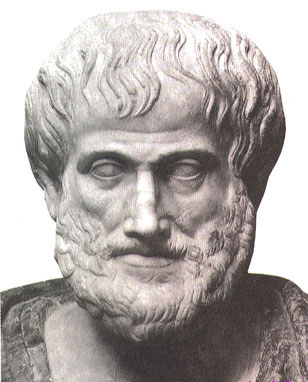
Aristotle’s philosophy in the Nature of Man argued man has a unique nature: the soul. Located within the soul is reason. Reasoning, guides humans every action. The human ability to reason, Aristotle argues, is rationality. Rationality, in turn, is unique to the human soul.
Saint Augustine of Hippo restructures Aristotle’s argument of rational man into a theological construct. In Confessions, Augustine holds
…a perfect man to be in Christ—not the body of a man only, nor, in the body, an animal soul without a rational one as well, but a true man. And this man I held to be superior to all others, not only because he was a form of the Truth, but also because of the great excellence and perfection of his human nature, due to his participation in wisdom.
Augustine believed it is humans “participation in wisdom” (or rationality), which places the human soul into relationship with Christ. Importantly to Augustine is the human rational soul is something very different from that of the animal soul for the rational soul creates the “perfect man…in Christ” who is “superior to all others.”
Saint Thomas Aquinas furthers Augustine’s work of setting the “rational soul” of humans against that of the “animal soul.” Aquinas holds much of creation has a soul, yet there is clearly a difference between the rational soul of humans and that of, say, a dog. This standpoint places the rational human soul as better than and therefore above all other created souls. Thus, Aquinas argues for soul layering where the human rational soul is above all other created souls. This soul layering argument allowed Christianity to create a structure of belief where not only does the animal soul reside at a level lower than that of the rational human soul, but also, those humans who are not rational have a soul that resides somewhere between that of the rational person and that of a dog.
Aquinas’ soul layering argument matters when word of Cristóbal Colón’s voyage reaches Spain in 1493.
© David B. Bell 2011

 Chewing the Cud
Leave a reply to Dave Cancel reply