The following was written as a Position Paper to the Christian Church (Disciples of Christ)
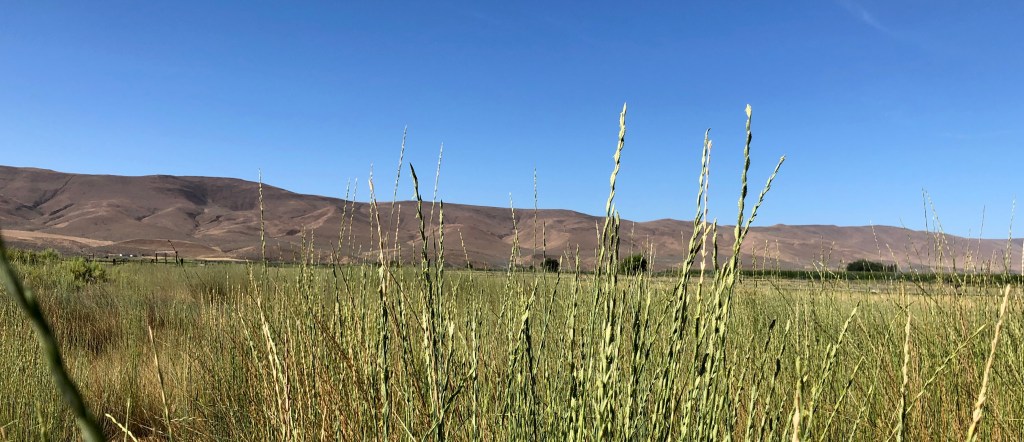
A hint of afternoon heat whispers behind the cool morning air. Late spring has a way of saying what was and what is. We sit beneath a tree at shade’s edge. Those who’ve heard heat sit deeper into shade while others who still know cool move their chairs toward the sun. We are talking of Church, Indigenous, systems and structure, colonization, and dismantling the Doctrine of Discovery. As we talk the sunlight finds paths through peach tree leaves and stipples grass. The breeze bends leaf stems and sun’s stippling comes alive; the light dances with grass leaves.
Earlier, we’d taken a walk when the sun threw our shadows as giants. A lone hawk caught a breeze and circled above. Grass bent and rebound as we walked. We talked but mostly listened. Now we sat and talked. A group of Protestant leaders trying to learn a little more of one another: what does Indigenous justice mean, how are our institutions helpful – or not, what edge do we find between community and the institutional Church. The air held our desire to go deeper, to express thoughts and wanderings whom speak of our interior, but we carry our institutional structures within, so today, on this first visit together, we’re keeping it safe.
We talked about where and how Indigenous ministries are voiced in our particular denominations. Having been in this situation before I had a good idea of the reaction I would get when I my turn came. “The Christian Church (Disciples of Christ),” I said, “has yet to develop, accept, or allow Indigenous voice to formally speak within its structure. As Disciples, we’ve yet to have meaningful, intentional, or critical conversation concerning Indigenous voice within the many institutional ministries or part of the many events, places, forums, or judicatory where voice might influence institutional structure, history, or theology.” The response, as you might expect, was one of shock… “you mean to say there remains a mainline denomination, in 2025, who has yet to engage Indigenous voice?!” The heat began to have an edge. The sun rose above the peach tree and began to glare off grass. Chairs adjust into the shifting shade.
****
Church and Indigenous: Structure v. Natural
There are numerous institutional reasons why Church struggles with Indigenous voice. This essay will give thought to why the Christian Church (Disciples of Christ) has yet to welcome Indigenous worldviews by considering institutional racialization, how racialization defines and denigrates Indigenous, and end with a thought on how Indigenous might enrichen shared Church theology.
Every mainline Protestant denomination struggles with Indigenous. Most, though, have an Indigenous ministry within their structure. However, having an Indigenous ministry does not mean Indigenous is heard. The lack of ears to hear is not unique to Disciples. Yet, our unique historical development within the geographic and political boundaries of the United States and Canada has caused us to develop a distinctive institutional model that has held Indigenous voice at bay for 195 years.
Disciples general acceptance of being identified as a western-movement Church speaks to our rootedness in the socio-political ground of US nationalism and colonization. After the first few challenging decades as a people claiming a new Christian identity, we settled as a people who affirmed and used the Nation’s socio-political-occupying construct. As the US militarized the western continent, Disciples institutions and ministries took advantage of US (and Canadian) laws and Acts of occupation: e.g., Indian Removal Act/Trail of Tears, Boarding Schools, Indian Appropriations Act, General Allotment Act, Indian Relocation Act. While people with ancient landscape existence were dislocated, removed, and killed throughout the late 1800’s and early 1900’s, Disciples institutions—congregations, schools, colleges and institutional ministries—settled and profited in the resourcing and commodification of the western landscape (e.g., Disciples involvement in the 1893 Cherokee Strip Land Run). By the turn of the 20th century, Disciples identity had squarely settled into a US socio-political-genocidal ecology. However, why does the institution continue to struggle with Indigenous accountability at the quarter-century mark of the twenty-first century?
Racialization
Disciples created the Office of Reconciliation after affirming the 1999 Anti-Racism/Pro-Reconciliation Initiative, “Many Members, One Table.” For the last twenty-five years Reconciliation has helped us recognize the false construct of race, how this construct has benefited the institution—growth/profit, power, and prestige—and why the institution vehemently maintains a racialized structure. Although the race construct is false, Lisa Barnett, co-moderator of the Center for Indigenous Ministries, reminds us that “these constructions have social realities with consequences.”[1] When we recognize Disciples institutional birth is within the US socio-political paradigm of the 1830’s and “Religion is a product of the society from which it springs,”[2] it is little surprise the consequence is the embedment of race throughout Disciples thought, theology, and administrative culture. The resulting racialization of Disciples history, stories, and narrative, has prevented us (individually and institutionally) from having the ears to hear and the mindset to understand Indigenous.
Moreso, racialization is modeled by Disciples internal divisions/ministries of race: National Convocation, North American Pacific/Asian Disciples, Obra Hispana (Let’s also be real, in an institution structured on race, currently, racial-social justice is not possible in the Church without these ministries). Therein lies the problem. People of a racialized Church hear race when they hear Indigenous. Such hearing causes us to think an Indigenous ministry (e.g. Center for Indigenous Ministries) is simply one more race struggling for institutional identity, power, and prestige. However, Indigenous is natural and creational rather than racial. Meaningful Disciples-Indigenous relationship centers on our ability to understand Indigenous is not a race identity.
Indigenous
The word Indigenous is complex because it lacks a uniform definition. Common usage though, describes Indigenous as original people of traditional lands. Original people of traditional lands normally include the practice of traditional values, way of life, and culture. This definition has value when opposing capitalistic, empire, colonial-settler systems. However, it also serves those systems as well. When we define Indigenous so tightly that we can imagine an original people of traditional lands box, racialized systems benefit because a staggering number of Indigenous people are left outside the box. We must remember, for instance, US Christian boarding schools and Canadian residential schools did their work well. Boarding schools used Christianity to “civilize” American Indian children and eliminate their Tribal identity. When possible, they also placed Indigenous children into White foster care and adoption. Generational Christian teaching and national adoption policies have led to untold numbers of Indigenous Canadian and US people who no longer know themselves as Indigenous. This is partially why the United Nations Declaration on the Rights of Indigenous Peoples affirms Indigenous cannot be thought of as an “in-a-box” word. Rather than defining Indigenous, the Declaration stresses people have the right of Indigenous self-identification. To think Indigenous is to lean toward the personal rather than the institutional.
The Center for Indigenous Ministries (DOC) believes we should employ three Indigenous constructs. First, Church history needs to reflect its support and engagement of systemic Indigeous genocide in the US and Canadian landscape. We need to acknowledge our support of US and Canadian colonization, from 1832 to the current era, has benefited the Church in land ownership, wealth, numerical growth, and Christian prestige. Recognition of generational wealth and power calls the institution to reparative and restorative work that advances Indigenous identity. This is fearful work because, to do so, the Church must end its dependence on growth, power, and prestige.; engaging a humility that allows for participation in reparations, compassion, restoration, and confession.
Second—and this is the weirdest construct for a racialized Church—Indigenous care, justice, and restoration is not just about people. Racialization has us think of Indigenous in capital “I,” proper noun terms. In other words, Indigenous ispeople! Our capital “I” people-based thinking allows the Church to maintain a structure that only serves and privileges people. This people focused thinking benefits racial structures and damages Indigenous.
The Center encourages us to think in terms of lowercase “i” indigenous. Lowercase “i” indigenous allows us to inhabit the natural landscape of creation. Lowercase “i” shifts us from a racialized socio-political human-centered existence, as Rachel Wolfgramm notes, to living a holistic relational worldview like that of the Māori where “natural, social, and spiritual worlds are interrelated.”[3] Indigenous is a cosmology of the collective. Tribal negotiators ensured “rights were not individual but collective”[4] in US treatymaking, for instance, by using phrasing like that of people having the “right of taking fish at all usual and accustomed places.” Fish and people live in a natural kinship of reciprocal relationship.
Disciples have engaged in good work in the liminal space of social and spiritual (e.g., the US Civil Rights Movement of the 1960’s). However, because we have not engaged the natural, Disciples maintain a socio-political structure favoring and privileging humans at the expense of non-human creational life. We have allowed the natural to become an afterthought. Without the natural, our social and spiritual work is mediocre, at best.
When we bind spirit and community with the natural our work becomes ancestral. Water Protectors reflected ancestral when they stood alongside their kin, the water of Mni Sosa, at Standing Rock. They ceased being people alone because they “personif[ied] water and enacted kinship to the water, the river.”[5] Becoming water is the work of becoming Indigenous. Reflecting a bound siblingship between human people AND animal people, plant people, wind people, water people, and land people. Crow Eddy, Co-Moderator of the Center for Indigenous Ministries, reminds us that we experience the divine and eternal when we recognize and accept all of our relations. Indigenous needs capitalization because all of our relations is divine.
Indigeneity
The second leads to the third and perhaps the hardest concept for the racialized Church. Indigenous calls us to universal—all of our relations—Indigeneity. Indigeneity, like Indigenous is defined in a number of ways. From the Center’s point of view, Indigeneity is accepting all of creation as related and equal life. Indigeneity invites us to live knowing the natural world are our siblings. Indigeneity loses socio-political-race bonds and labels and remembers the awe of our natural birthed identity. Natural identity recognizes we were not born with controlling systemic labels: e.g., male or female or queer, or racial institutional labels: e.g., black or brown or Asian or white. Natural identity acknowledges we are no more and no less than the spirit of our naming. Natural identity allows us to speak and write about our siblings without he, she, they, or it terms and instead simply use their gifted names. As Gregory Smithers notes when talking about our Two-Spirit siblings, we claim natural identity when we evoke “Indigeneity…[for it] contributes to the decolonization of [our] gender and sexuality,”[6] Rather than allowing systems and institutions to define and label us, Indigeneity allows us to be the lush people of our birth.
Indigeneity helps us know our creational bond as natural siblings. Indigeneity is a call to living as if I am Indigenous to my landscape. This way of existing is living into a day when our children become Indigenous to their landscape. Indigeneity is the process of being while becoming place. “The natural context of land,” as Simon Ortiz reminds us, “encloses us, so that we are close to one another… [the landscape is] as familiar to us as a relative. Skin to sand and stone. Skin to water…grass and flowers to skin. Tumbleweeds, cactus, yucca to skin.”[7] The natural of our landscape calls us to end systemic and institutional models of power, prestige, and profit in favor of relationship, care, reciprocity, and love. “Returning [us] to the place,” as bell hooks recalls, is “where I had felt myself to be part of a culture of belonging—to a place where I could feel at home, a landscape of memory, thought, and imagination.”[8]
Indigeneity’s simplicity is we belong to the memory, thought, and imagination of our landscape. We have little need to value power, prestige, profit/growth when we claim our place within creation. Remembering our natural interior—our mind, soul, and body—has always been and will always be in kinship with the cosmos. When we choose to begin the soulful reparative work of intertwining our identity with those of our creational siblings: trees and elk, sage and salmon, water and finch, dirt and lizard, wind and grass, we experience divine indwelling in our place.
****
Landscape Theology
Indigenous voice struggles in the Church for many reasons – racialization is one. The others exist in the want of power, prestige, profit, and growth. Reclaiming our natural selves, our Indigeneity, helps us breakdown the Churches structural walls and reclaim Creator’s voice as sibling. When we accept ourselves as creational siblings we begin to hear our landscape’s ancestral theology.
A popular phrase in many Christian settings is, “When the Christ in me meets the Christ in you.” A simple axiom recognizing the cosmos’ existence in human life. When we use this phrase in relationship with our creational siblings though, our theology has the opportunity to transform.
Grass loves sunny days in the eighties. You can nearly perceive Grass’ growth when the temperature is perfect. On sunny spring days Grass does all it can to have you to lie down, enjoy light’s playfulness with clouds, and join them in reaching out to touch sky. To lie with Grass is to experience gratefulness as light touches and enters Grass’ body, where, in ancient familiarity of photosynthesis light becomes sugar and Grass knows life. For Grass, light is life.
Amazingly, for each inch Grass grows toward sunlight, Grass sets another inch of root into soil. Grass knows harmony in the liminal of soil and sky. As with sun light, soil’s darkness is life. In the dark of soil, Grass roots spread and invite relationship with water, worms, beetles, ants, and nematodes. Without the community of soil’s dark landscape Grass will not exist. For Grass, darkness is life.
To use the axiom, when the Christ in us meets the Christ in Grass, we encounter a Christ of light and dark. Grass’ theology of sky and light and soil and dark helps us to experience a creational Christ. Unlike the human Christ that is the light of the world, who brings light into the darkness, Grass births a Christ in the harmony of a star married to night’s darkness. Together, light and dark reflect the sacred and divine. Grass teaches us that in becoming Indigenous we become people (even a Church) of dark and light where the one Body of Christ welcomes all of creation, Grass to Elk, to the ancient table of the natural.
Creation’s Table is natural theology. A natural theology that is not achieved through Christian lenses, but a Christion theology realized through natural lenses. At the Table of Creation our children will have the opportunity to evoke ancient theologies of divine. They will affirm Howard Thurman’s words, “I could talk aloud to the oak tree and know that I was understood,”[9] with an “of course.” They will become Indigenous and ancestral. Fear of Indigenous will evaporate as they live into the tree’s shifting shade.
[1] Lisa D. Barnett, Peyote Politics, 5.
[2] Barnett, 6.
[3] Nelson & Shilling, Editors, Traditional Ecological Knowledge, 216.
[4] Ned Blackhawk, The Rediscovery of America, 339.
[5] Nick Estes, Our History Is The Future, 256.
[6] Gregory Smithers, Reclaiming Two-Spirits, 227.
[7] Nelson, 90.
[8]bell hooks, belonging: a culture of place, 221.
[9] Howard Thurman, With Head and Heart, 9.

 Chewing the Cud
Leave a comment