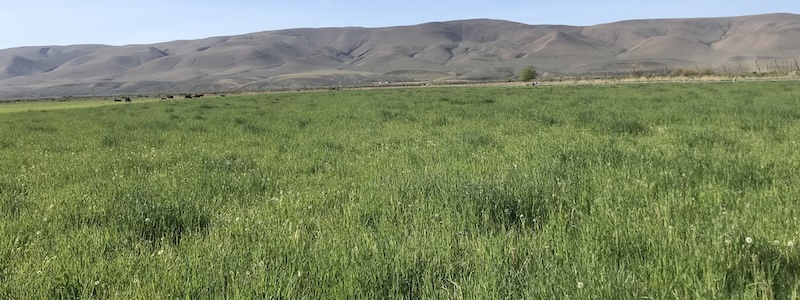
Many of us have heard the phrase, “When the Christ in me meets the Christ in you.” A simple way of saying the cosmos exists in the lives of all humans. I find the phrase all the more interesting when I think of Indigenous. Indigenous calls us to know all creational life as relation. Or, perhaps better said, all of creation is sibling to one another. Imagine that is the case. Imagine Grass as sibling.
Grass on the farm loves sunny days in the eighties. On a sunny late-spring day, Grass’ growth is nearly perceptible. Just as perceptible is Grass’ wish to have you lie down beside it and watch how the clouds play with sun’s light. As Grass grows beside you, you can fell Grass’ gratefulness as light enters Grass’ body. Listen closely and you can almost hear the photosynthesis conversion of light energy becoming sugar energy. Grass knows light as life. Yet, as you lay with Grass, you soon feel the ground below and know Grass is more than green chlorophyll and a lover of light.
For each inch Grass grows toward sunlight, Grass sets it root an inch into soil. There, in the midst of soils darkness, Grass roots spread and enter into relation with soil and water, worms, beetles, ants, and nematodes. Grass loves the dark of soil as much as it does the light of sky. Just as Grass life needs suns light, Grass needs earths darkness.
Grass theology is of sky and light, soil and dark. With that in mind, when the Christ in us meets the Christ in Grass, we meet a Christ of light and dark. Unlike the institutional Christ—known only through human thought—who is the light of the world who brings light into the darkness. Grass teaches of a star in deep relationship with sky’s darkness. A place where light and dark are harmonious, who, together, speak of the sacred and divine. Grass teaches us of a Christ who is the dark and light of the world who holds light and dark in harmony.
Grass theology teaches we are people of sky and ground, of sun and loam, of light and dark.


 Chewing the Cud
Leave a comment